
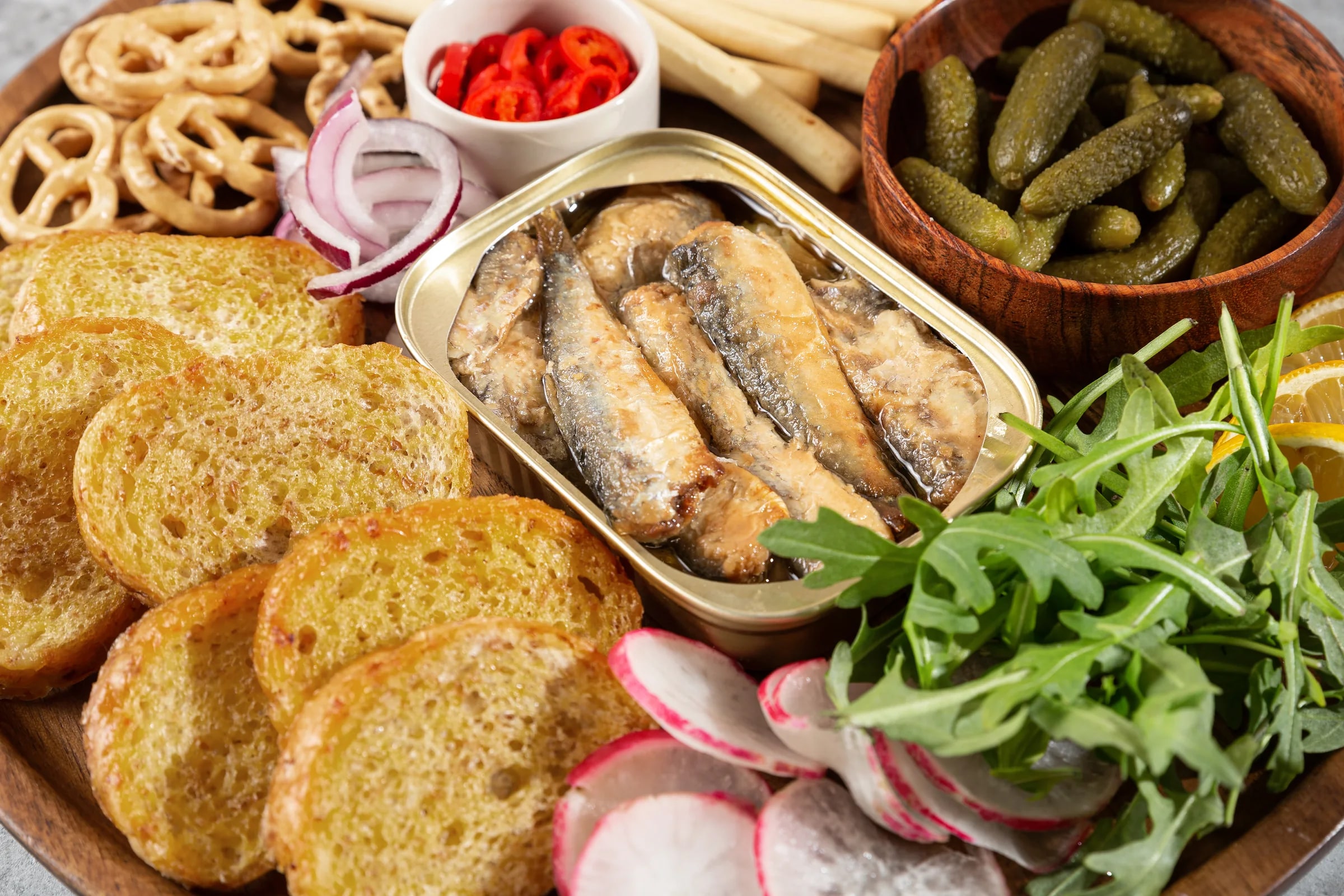
Not a new food. A new way of seeing it.
Tinned fish has moved from the back of the pantry to the centre of contemporary food culture.
Sardines and other tinned seafood never stopped being practical, nourishing or deeply rooted in coastal food traditions. What changed was their cultural frame. A generation that once read the tin mainly as emergency food now also sees a compact meal, an ingredient, a designed object and an invitation to put something good on the table without turning dinner into a project.
That shift matters because it is larger than a passing aesthetic. Social media made the category visible, but visibility worked because the product already answered several modern needs at once: useful protein, strong flavour, long shelf life, small-format convenience and a sense of discovery.
The food did not suddenly improve. The cultural lens changed.
Protein brought attention. The whole product kept it.
Protein-focused eating has made people look again at foods that deliver meaningful nutrition without elaborate preparation. The Food and Agriculture Organization notes that canned fish is rich in protein and other essential nutrients and can be a good source of omega-3 fatty acids. Those are category-level observations, not a promise that every tin is nutritionally identical.
Species, recipe, oil, sauce, serving size and processing all influence the declared values. A sardine in olive oil is not nutritionally interchangeable with fish in tomato sauce, and a label remains the correct source for the exact product. The responsible conclusion is simple: canned oily fish can make a valuable contribution to a varied diet, while precise claims must always follow the individual product record.
Convenience without automatic compromise
Convenience is often treated as the opposite of quality. Canned seafood exposes the weakness of that assumption. A well-made product can be opened in seconds and still reflect careful raw-material selection, recipe control, can integrity and disciplined thermal processing.
Many canned fish products achieve shelf stability through airtight sealing and controlled heat sterilisation and therefore do not require added chemical preservatives. That statement is deliberately not universal: exact ingredients depend on the recipe and must be checked on the individual label. Canning also does not preserve every nutrient completely unchanged. Its value lies in making a safe, stable and useful food while retaining meaningful nutrition.

The pantry became part of everyday strategy
The pandemic years renewed attention to foods that store well and can become a meal without a last-minute shop. That behaviour did not disappear when restaurants reopened. People kept the useful lesson: a considered pantry creates flexibility.
Tinned fish works across occasions. It can sit beside bread and pickles for a quick lunch, become the centre of a composed snack board, add depth to pasta or potatoes, or support a quietly elegant table. Its convenience is not only about speed; it is about having good options available.
Conservas culture met the visual internet
Portugal and Spain had long demonstrated that canned seafood could carry place, ritual and pride. Attractive packaging, specialist shops and simple serving traditions gave the category a language far richer than “food from a can”. Social platforms then transported that language to new audiences.
Tinned-fish boards, date-night videos and tasting rituals made preparation visible and approachable. The format suited the camera: several textures, colourful tins, bread, citrus, ceramics and the satisfying act of opening a small package. The strongest posts did more than make the food photogenic. They taught people how to serve it.
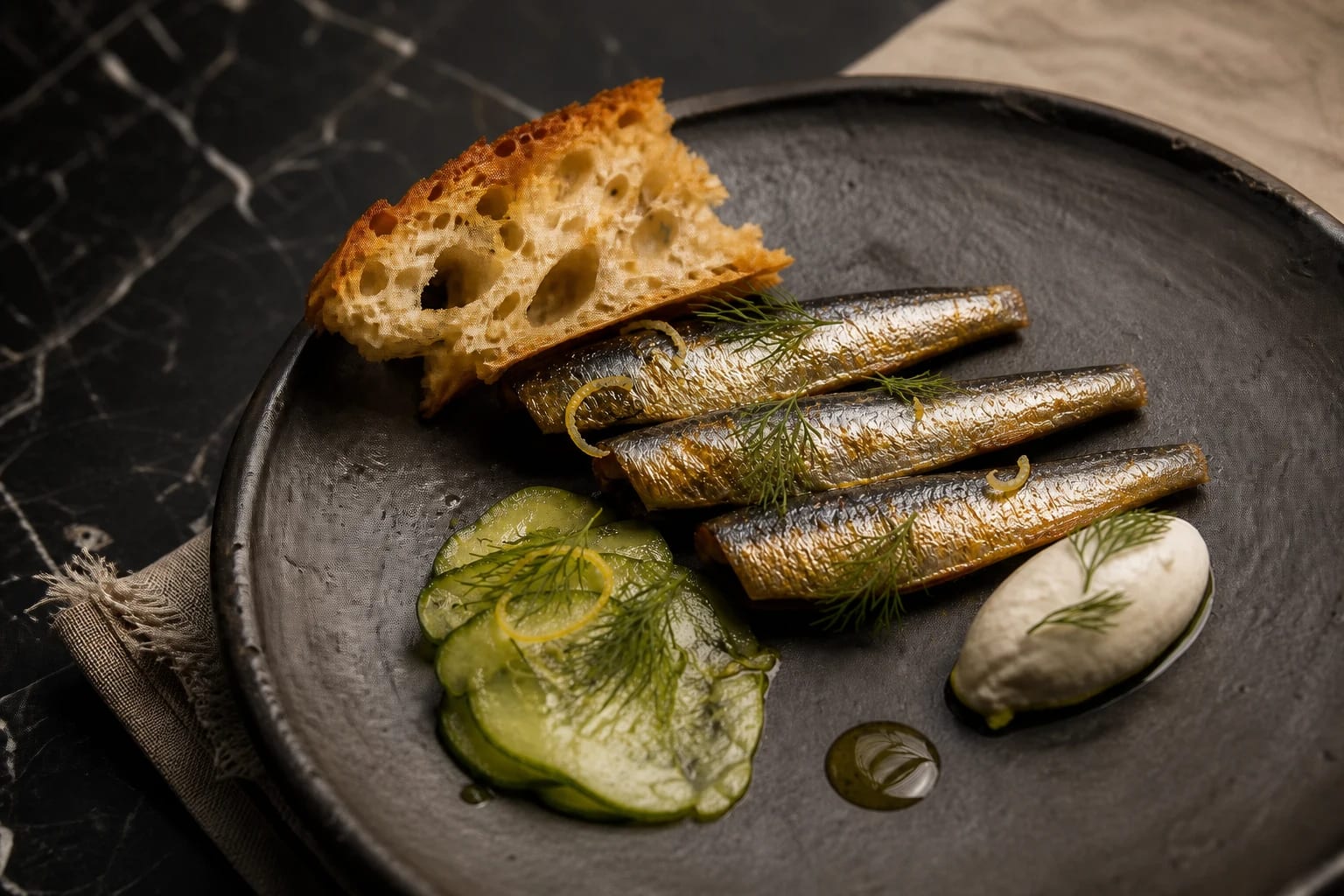
Small oily fish suit a taste for character
Modern eating has also become more comfortable with smoke, acidity, chilli, fermentation and other assertive flavours. Sardines, sprats and related small oily fish belong naturally in that landscape. They are distinctive rather than neutral, and their character rewards confident but uncomplicated accompaniments.
That rediscovery has moved beyond food. Sardine motifs now appear in ceramics, illustration, textiles and accessories. The fish has become a shorthand for coastal pleasure and a certain playful sophistication. Culture can open the door, but it cannot replace what is inside the tin.
Premium packaging helps. It is not proof of quality.
Good packaging can communicate care, protect the product and make a category easier to understand. It can also become theatre. A beautiful tin is not evidence by itself of raw-material quality, sound processing, responsible sourcing or a well-balanced recipe.
A serious buyer or curious consumer should still read the species, ingredients, nutrition declaration, net weight, origin information and any verified certification. Real quality is the alignment of product, process and presentation. When those three support one another, premium design becomes an honest introduction rather than camouflage.

The useful nuances: sodium, recipe and sourcing
Canned seafood deserves neither blanket praise nor blanket suspicion. Sodium can vary substantially. Oil and sauce change energy and fat values. Species differ. A certification may answer one sourcing question without answering every environmental question. Serving size matters, especially when a package is shared or eaten over more than one meal.
The best approach is product-specific: compare declarations on the same basis, understand what the sauce contributes, and look for traceable, verifiable sourcing information. “Small fish” should not be turned into a universal sustainability claim. Fisheries, stocks, regions and management systems must be considered individually.
From Engure: familiarity creates respect
At SIA Unda in Engure, canned seafood is not an internet discovery. Fish processing at the site reaches back to 1907, while the present company was formed in 1992. That long view encourages a measured response to the trend: welcome the curiosity, then direct it toward the product itself.
A tin is a compact piece of food engineering and culinary judgement. It asks manufacturers to balance safety, texture, flavour, appearance and consistency. When consumers understand that work, the category becomes more interesting—not because it has been reinvented, but because its existing qualities are finally being noticed.
People did not discover a new food. They rediscovered qualities that were already present.