
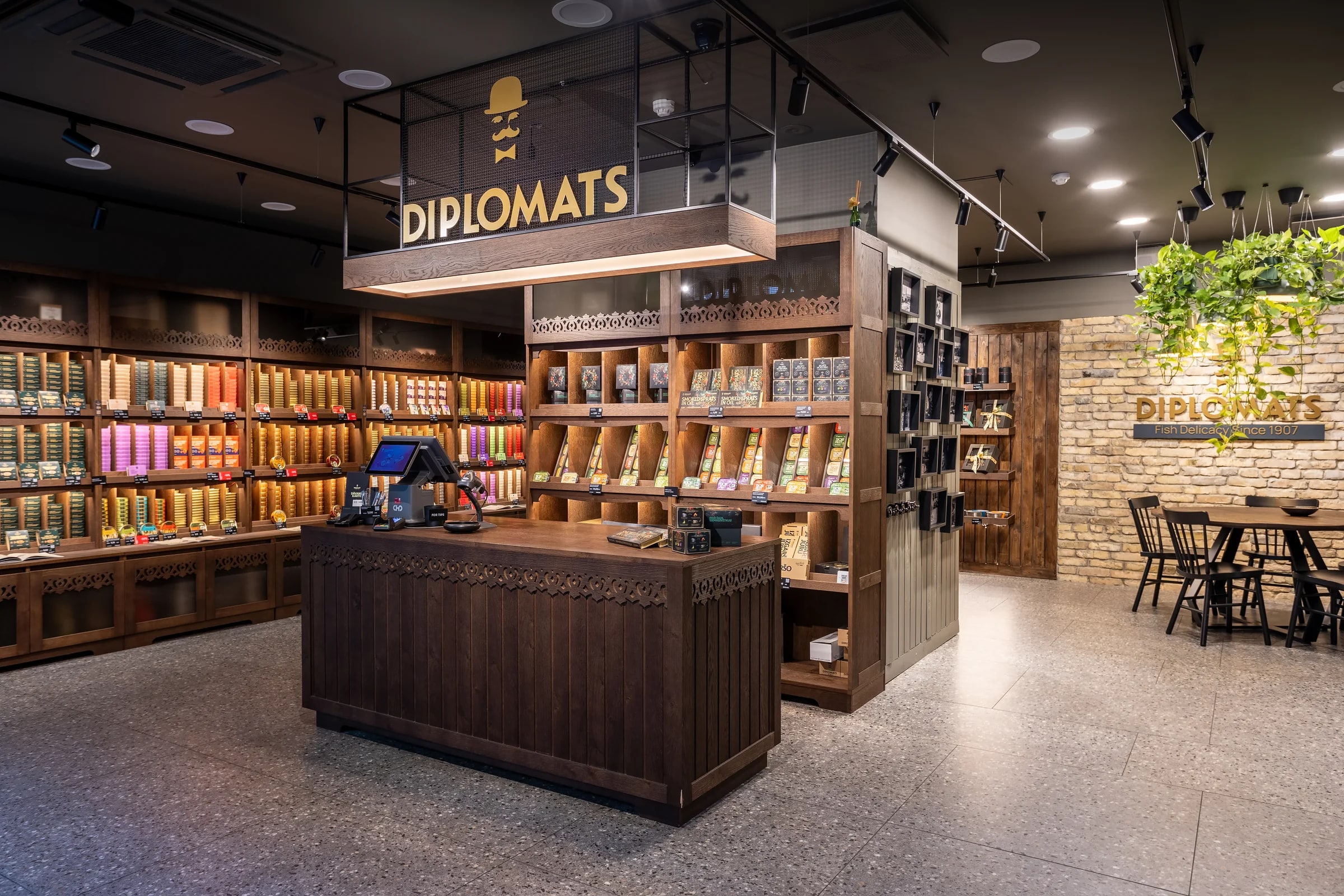
Two coastal nations, two remarkable traditions
Portugal and Latvia both built seafood cultures from proximity to the sea, preservation knowledge, industrial capability and generations of skilled work. Portugal is widely associated with sardines and conservas. Latvia developed a distinctive Baltic tradition led by smoked sprats and supported by a broader range of canned seafood.
The comparison is not a contest. Portuguese conservas earned their reputation through genuine product quality, cultural continuity and strong public storytelling. Latvian products followed a different historical route—one in which production knowledge endured, but the story attached to the place and maker was often less visible to the final consumer.
Portugal turned conservas into visible culture
In Portugal, canned fish remained legible as part of national food culture. Historic manufacturers, specialist retailers, restaurants, decorative packaging and tourism helped connect the tin to a specific place. Museums and maritime institutions also preserved the relationship between coastal communities, fishing knowledge and industry.
The result is a category people encounter not only in a supermarket aisle, but in streets, shops, restaurants, gifts and cultural memory. Portugal taught visitors how to see conservas: as food, craft, design and heritage at the same time.
Latvia’s story was interrupted
Latvia’s twentieth century brought occupation, war, nationalisation and centralised industrial systems. During Soviet occupation, production was organised around volume, standardisation and broad distribution. Individual factory identities, local origin stories and regional brands were often less visible to the final consumer.
That distinction is crucial. The craft and technical knowledge did not simply disappear. People continued selecting, smoking, sorting and packing fish. Products travelled widely, but the identity of the maker and the meaning of the place did not always travel with them.
The craftsmanship survived. Its identity did not always travel with it.

Handwork hidden inside an industrial image
Traditional smoked-sprat production depends on a sequence of judgements: raw-material selection, smoking, sorting, visual quality control, careful arrangement in the can and packaging inspection. Modern equipment supports control and scale, yet skilled hands remain important in the moments where appearance and product integrity are assessed.
It is more accurate to describe the work as industrial in scale but artisanal in execution than to force it into either category. Significant volumes can coexist with manual precision. The human contribution should be recognised without romanticising difficult work or claiming that every process is entirely manual.
Engure was shaped by export
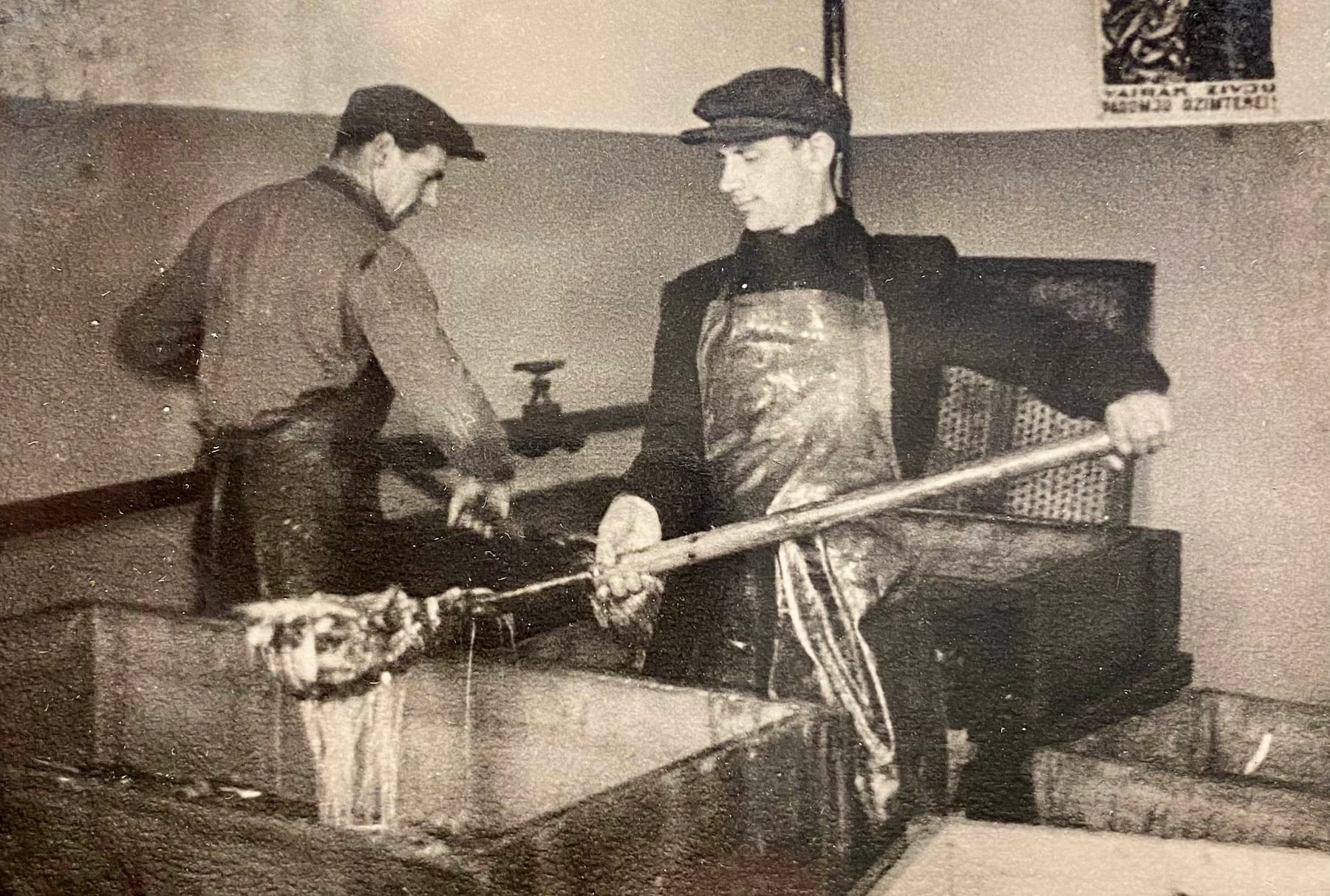
Industrial fish processing in Engure began in 1907. The Diplomats mark was registered in 1922 and became the exclusive brand of the Engure factory in 1931. After the Second World War, production resumed under a different political and ownership system; the plant later became specialised in export production during the 1960s.
SIA Unda was formed in 1992 after the collective system ended. The present company is therefore not the same legal entity that existed in 1907, but it works at a site with a documented production heritage extending across those periods. Export expectations helped shape the factory’s discipline even when the manufacturer’s own identity was not prominent on the shelf.
Why Portugal became more visible
Portugal benefited from a powerful combination: international tourism, visible gastronomic culture, continuity of historic brands, collectable packaging, specialist shops and restaurants that treated tinned seafood as a source of pride. None of those elements is merely marketing. Together, they create the public context in which genuine product quality can be recognised.
Latvian manufacturers historically placed greater emphasis on production, export relationships, distributor needs and customer brands. That capability built business, but it did not always build international consumer recognition for Latvia itself. The product could arrive successfully while its origin story remained quiet.
What makes the Latvian tradition distinctive
Latvian canned seafood has a language of its own: Baltic sprats, smoke, compact intensity, careful arrangement and a long technical familiarity with products designed for export. The tradition combines regional taste with the operational discipline required to make consistent food at scale.
Recognition should rest on defensible qualities, not superlatives. Latvia does not need to claim that its products are universally superior or that it invented every form of smoked sprat. It can speak confidently about a real regional heritage, experienced production and the ability to carry familiar techniques into new recipes and formats.

A new moment for Latvian visibility
Current interest in tinned seafood, small oily fish, smoke, bold flavour, traceable origins and well-made packaging creates an opening for Latvian producers. Consumers are more willing to ask where a product comes from, how it is made and why it tastes the way it does.
That interest does not guarantee success and should not be inflated into unsupported market forecasts. It does create an opportunity: manufacturers with long production and export traditions can finally connect the quality of the object to the story of the place.
The craft is here. The story must travel with it.
Portuguese conservas became globally visible because Portugal successfully taught the world how to see them. Latvian canned fish followed a more complicated historical path. Quality, craftsmanship and export knowledge survived, but the story was often obscured by occupation, industrial anonymity and production for other people’s brands.
Today, consumers are rediscovering qualities Latvian canned seafood has represented for generations. Latvia is not entering an unfamiliar category. It is learning to present its own contribution with the clarity, pride and evidence it deserves.
Portugal preserved the story. Latvia preserved the craft. Now Latvia must tell the story.