

The short answer
Traditionally made smoked sprats depend on a managed natural resource, fishing and cold-chain infrastructure, controlled smoking and sterilisation, skilled handling, packaging, food-safety systems and European labour. Many of those costs are structural. They may move up or down from year to year, but none can be removed without changing the product, shifting pressure elsewhere in the supply chain or weakening reliable production.
This is not an argument that every higher price proves higher quality. It explains why a labour-intensive, heat-processed and carefully presented seafood product cannot remain permanently disconnected from the real cost of fish, people, energy, materials and compliance.
A traditional product can be widely available. It cannot be infinitely cheap.
Value is built through the whole chain
- 01Fish resource
A managed, seasonal biological input.
- 02Landing and cold chain
Crew, safety, handling and temperature control.
- 03Smoking
Controlled time, heat and airflow.
- 04Skilled handling
Sorting, judgement and careful arrangement.
- 05Can and ingredients
Food, container, lid, oil or sauce.
- 06Sealing and sterilisation
Container integrity and validated heat processing.
- 07Quality control
Specifications, traceability, checks and release.
- 08Export delivery
Cartons, pallets, documents, warehousing and freight.
The fish is a biological resource, not an unlimited input
Sprat availability changes with stock condition, scientific advice, catch limits, season, weather and the size and quality profile needed for a particular product. Responsible management may constrain short-term fishing opportunities when stocks require protection, while stronger advice can support higher limits. The direction is not permanently one-way.
The 2026 Baltic agreement illustrates that variability: the agreed sprat total allowable catch rose by 45% from the 2025 level, while limits for several other Baltic stocks fell. One annual increase does not make the resource unlimited, just as one reduction does not prove permanent scarcity. Commercial supply depends on a living stock managed over time.
Fishing, landing and traceability have real costs
Fish reaches a factory through a chain that includes vessels, fuel, trained crew, safety equipment, landing, temperature control, transport and documentation. Conditions differ by fishery and supplier, but the work cannot be reduced to a raw-material price on an invoice. Traceability also requires businesses to know where food came from and where it went.
Unrealistically cheap raw material can mean that someone else is absorbing the pressure: crews, vessel maintenance, handling quality, stock stewardship or supplier resilience. A fair purchasing decision recognises that safe, legal and dependable supply requires functioning businesses throughout the chain.
Latvia is no longer a low-cost labour economy
Latvian wages have risen as the country has integrated more fully into the European economy. The Central Statistical Bureau reports that average gross monthly earnings reached €1,815 in 2025, 7.7% above 2024. Hourly labour costs, including wages and other employer costs, rose 7.9% to €15.45. These are economy-wide measures, not SIA Unda wage figures, but they show the environment in which Latvian manufacturers recruit and retain people.
Pay is only part of labour cost. Employers also support social contributions, safe workplaces, protective clothing, training, supervision and continuity across shifts. Demographic pressure and competition for skilled people add to the challenge. Latvia has not become less credible because people expect fairer wages. It has become a fuller part of Europe.
Real smoked sprats still require skilled hands
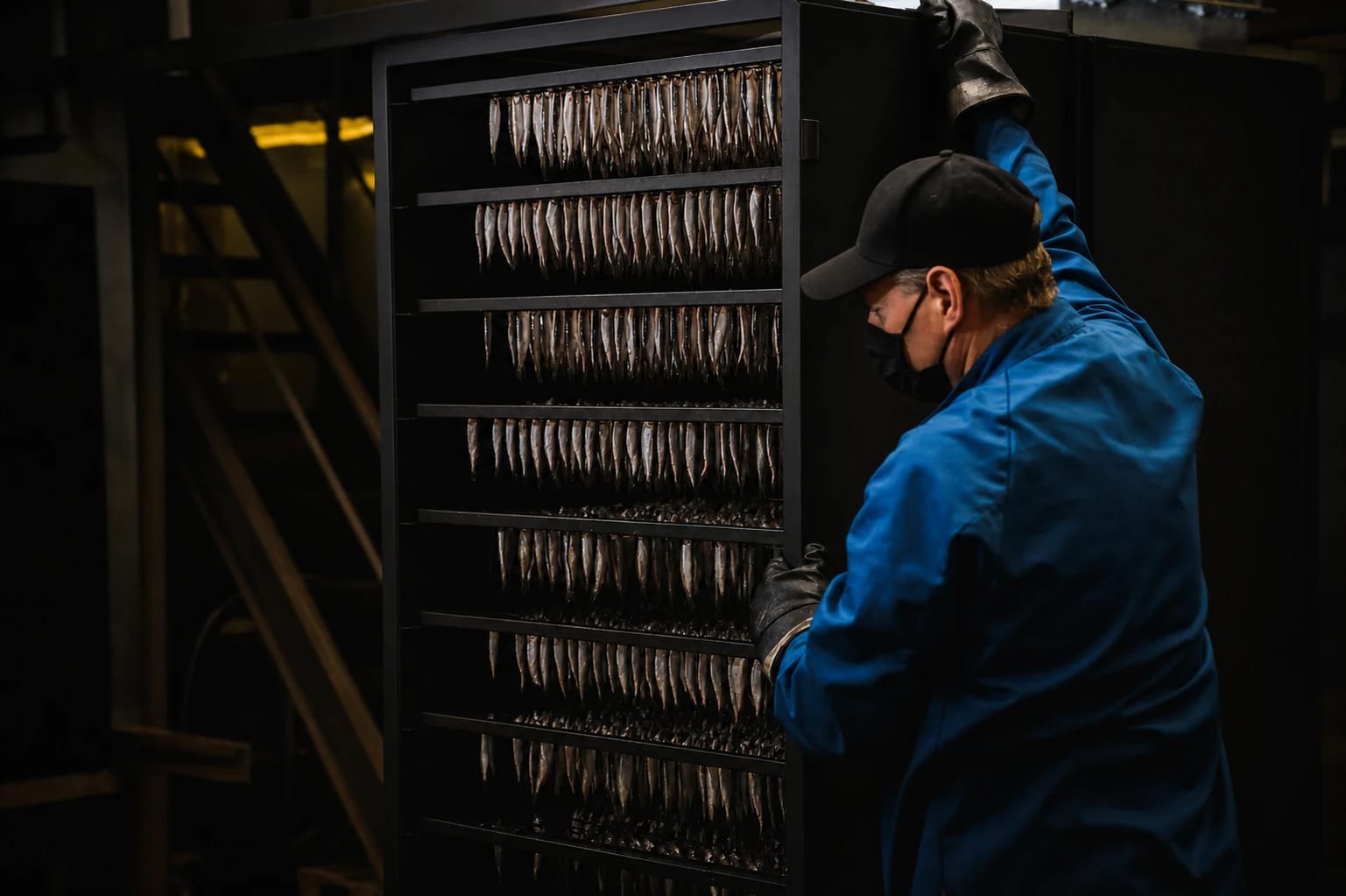
A smoked-sprat line brings together raw-material reception, preparation, smoking, cooling, sorting, filling, sealing, sterilisation, inspection and packing. Technology supports consistency and safety throughout. For relevant formats, trained staff still judge naturally variable fish and arrange them carefully in cans. The exact balance between manual and mechanical handling depends on the product and line.
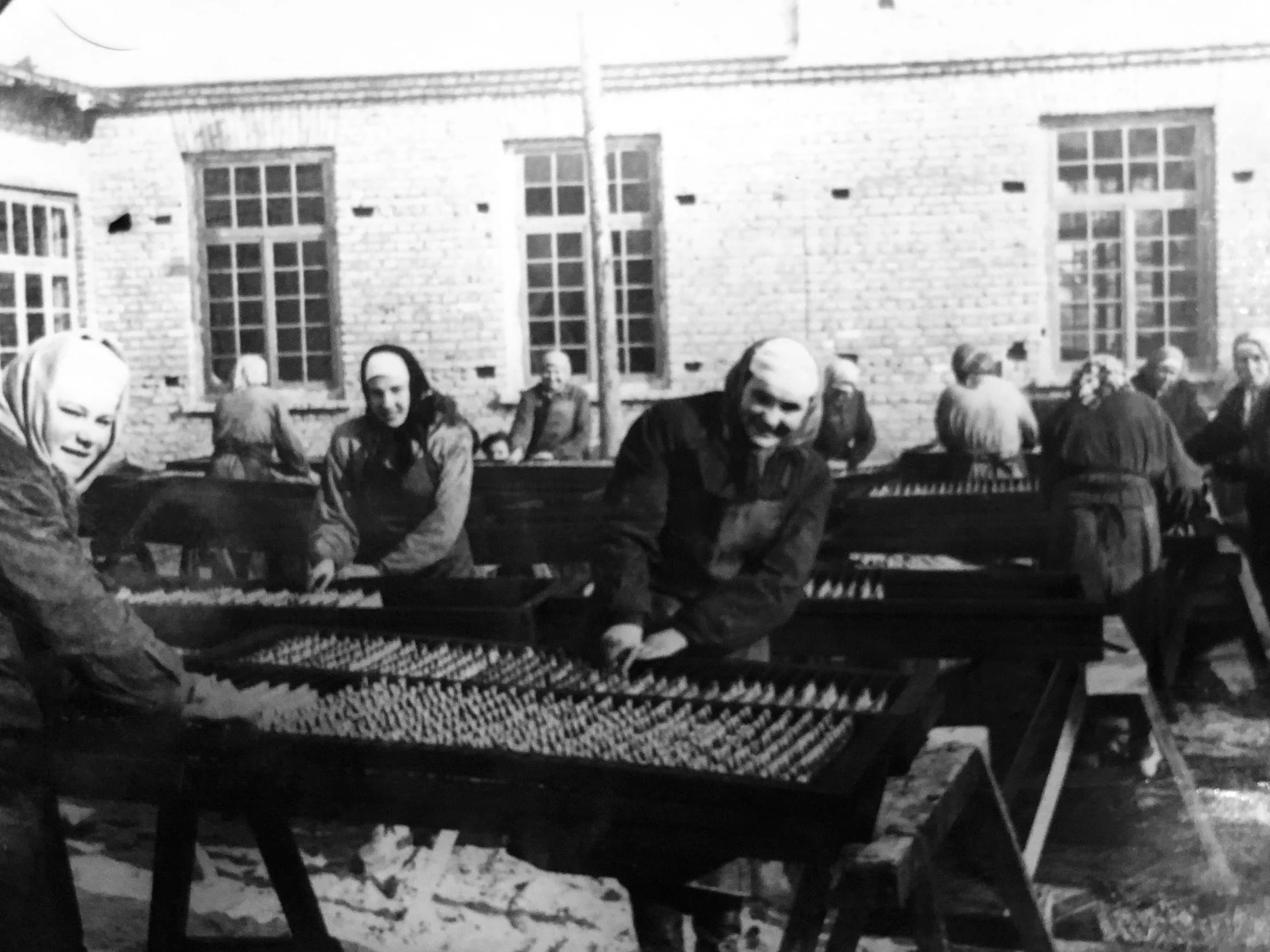
Arrangement is not decorative vanity. It is part of the identity of a traditional smoked-sprat product. Fish differ in size, shape and surface condition; gentle placement protects appearance and texture. Repeated good decisions require dexterity and concentration. The process can be industrial in scale while remaining dependent on human execution at critical moments.
Industrial in scale, but dependent on human judgement in execution.
Smoking and sterilisation use real energy
Controlled smoking requires heat and airflow. Chilled storage and handling require refrigeration. Sealed cans require a validated thermal process to achieve commercial sterility. Water, ventilation, pumps, compressed air and cleaning systems may also contribute to a plant’s energy demand. Efficiency can improve, but the process cannot become energy-free.
Energy prices are volatile rather than permanently rising in a straight line. Eurostat reports that EU industrial producer prices for energy fell during 2025, yet remained 66.3% higher in December 2025 than in January 2021. A recent decline can coexist with a higher long-term cost base.
The can is only one part of the package
A finished unit may involve a can body, lid, oil or sauce, label or lithography, sleeve, ink, adhesive and coding. Distribution adds cartons, dividers, film, pallets and transport labels. Glass formats introduce jars and closures with a different weight and handling profile.
Material markets move in cycles, so no single spike proves a permanent trend. The structural fact is simpler: packaging protects food, carries mandatory information, survives thermal processing and supports transport. Removing cost without understanding function can create damage, waste or compliance risk elsewhere.
Food safety and quality infrastructure are part of the product
EU food businesses must comply with hygiene requirements and maintain food-safety procedures based on HACCP principles. Dependable manufacturing also requires specifications, supplier control, incoming checks, traceability, allergen management, training, monitoring, laboratory work where applicable, audits, corrective action and documented release decisions.
These activities are easy to overlook because they are not visible when a can reaches the table. Their value appears when the system prevents a problem, identifies an affected lot or gives a customer reliable technical information. Compliance is part of consumer and commercial protection.
Old knowledge and modern control work together
- Product craftFish, smoke and judgement
Traditional identity depends on raw-material selection, controlled preparation and skilled handling.
- Modern assuranceTraceability, hygiene and verification
Specifications, HACCP-based procedures, records and release controls support repeatability and safety.
Export logistics add complexity
An export product must move through warehousing, pallet planning, freight and destination documentation. Customers may require language-specific packs, market-specific labels, certificates, import records and repeated supply against agreed specifications. Longer lead times also tie up materials and finished inventory before sale.
Transport rates and currency exposure can change quickly, so they should be treated as volatile rather than permanent explanations. The structural cost is the capability to plan, document and deliver a compliant product repeatedly across borders.

Why automation cannot solve everything
Automation can improve safety, measurement, repeatability and ergonomics, and manufacturers should use it where it strengthens the product and workplace. It is not a universal substitute for judgement. Fish are naturally variable; format changes require flexibility; visual grading and careful placement respond to conditions that are not identical from unit to unit.
Full automation may be technically possible for particular operations, but it can bring trade-offs in appearance, handling, flexibility or investment. The correct question is which combination protects the intended product, gives people safer work and produces dependable quality at a viable cost.
Smoked sprats are one of Latvia’s culinary treasures
Smoked sprats are one of Latvia’s culinary treasures: shaped by the Baltic Sea, smoke, skilled hands and more than a century of export tradition. Fish processing at the Engure site dates to 1907, while SIA Unda was formed in 1992. Keeping those dates distinct gives the tradition greater credibility.
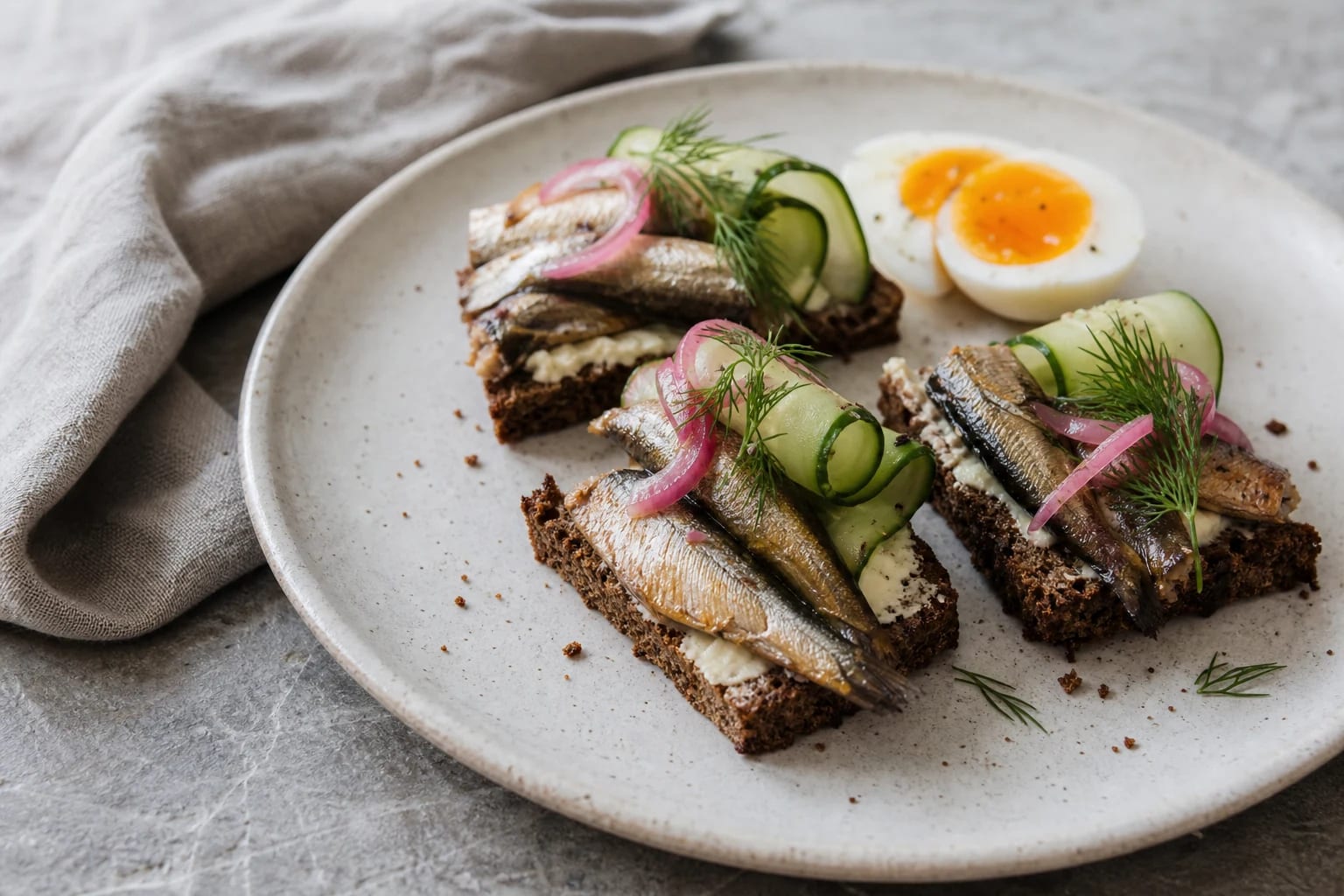
The product connects everyday food with a recognisable regional skill. It can be served simply with dark bread and potatoes or presented on a refined table without denying its roots. Economic sustainability is necessary if the people, equipment and knowledge behind that continuity are to remain active.
What a fair price protects
A viable product price helps support responsible purchasing, stable employment, safer work, training, quality systems, preventive maintenance, product development and reliable service. It gives a manufacturer room to solve problems properly rather than move them downstream.
For Engure, viability also supports continuity in a coastal place where seafood production carries economic and cultural meaning. A fair price is not a guarantee of every good outcome, but a permanently unrealistic price makes those outcomes harder to protect.
The value inside the can
The question is not only why traditionally made smoked sprats are becoming more expensive. It is why a resource-dependent, hand-finished European food tradition was expected to remain permanently cheap while the standards applied to fish, people, safety and delivery continued to rise.
Traditional smoked sprats can remain accessible, widely enjoyed and commercially successful. Their future depends on recognising the real value of the fish, the people, the process and the knowledge inside every can—and on distinguishing structural value from temporary market volatility.